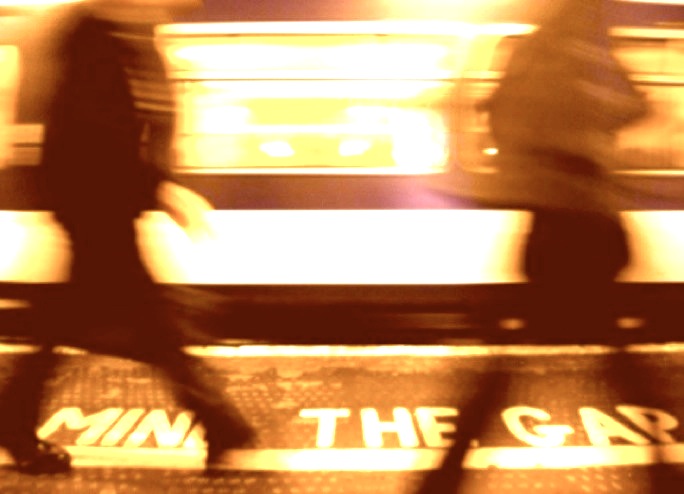
This is pure gold, in sepia.
Sunday, November 13, 2011


Saturday, November 5, 2011
Talking 'Bout My Generation
Went on KPFA last night to talk to UC Berkeley Professor and Music Historian Rickey Vincent about the events at Occupy Oakland on Wednesday with friends Justin Richmond and Charlie Stocker.
Our interview begins about 34 minutes in to this clip right here. It's available through the website for two more weeks, and I'll try to figure out how to get it from an archive after that.
A couple things that I think those in the movement (we in the movement?) need to keep in mind that we didn't have a chance to have an open discussion about on the show, is the importance of thinking critically within the left about our actions, and about what happened at Occupy Oakland and what's occurring at Occupy events everywhere.
At Oakland, a small contingent of people decided to occupy the Traveler's Aid Society without having an open, democratic and transparent decision about the move. This is dangerous, because many folks followed them without realizing that they didn't know whom they were following, or why. I'm not one of those who believes that police conspirators manufacture situations like this in order to provide proper provocation for their actions. But I am someone who believes that if we allow this to happen within the movement, we are not acting in accordance with its ideals. And that while I did see police getting ready to raid the camp before the situation at the Traveler's Aid Society got completely out of hand, it's indefensible that we put ourselves in such a compromising position to begin with.
While occupying foreclosed buildings may be a smart direction for Occupy to move in, if the democratic process is bypassed in order to get us there, we are not being faithful to the movement — are more importantly, we are not being faithful to each other or respectful of the fact that the power of out intellects together far outweighs and outlasts the power of our intellects alone.
Moreover, if we play off vandalism as an acceptable aside within the movement, we're not being faithful to it, but rather allowing a small contingent of people to overtake our image within the media, among policy makers, and internally.
The same goes for presenting ourselves as violently anti-police or anti-governance.
As a friend of mine noted, folks need to keep their wits about them in order to stay safe. We should celebrate our successes while maintaining awareness.
I think whispers of a dialogue about this have already begun, and that we should encourage murmurs as well.
Our interview begins about 34 minutes in to this clip right here. It's available through the website for two more weeks, and I'll try to figure out how to get it from an archive after that.
A couple things that I think those in the movement (we in the movement?) need to keep in mind that we didn't have a chance to have an open discussion about on the show, is the importance of thinking critically within the left about our actions, and about what happened at Occupy Oakland and what's occurring at Occupy events everywhere.
At Oakland, a small contingent of people decided to occupy the Traveler's Aid Society without having an open, democratic and transparent decision about the move. This is dangerous, because many folks followed them without realizing that they didn't know whom they were following, or why. I'm not one of those who believes that police conspirators manufacture situations like this in order to provide proper provocation for their actions. But I am someone who believes that if we allow this to happen within the movement, we are not acting in accordance with its ideals. And that while I did see police getting ready to raid the camp before the situation at the Traveler's Aid Society got completely out of hand, it's indefensible that we put ourselves in such a compromising position to begin with.
While occupying foreclosed buildings may be a smart direction for Occupy to move in, if the democratic process is bypassed in order to get us there, we are not being faithful to the movement — are more importantly, we are not being faithful to each other or respectful of the fact that the power of out intellects together far outweighs and outlasts the power of our intellects alone.
Moreover, if we play off vandalism as an acceptable aside within the movement, we're not being faithful to it, but rather allowing a small contingent of people to overtake our image within the media, among policy makers, and internally.
The same goes for presenting ourselves as violently anti-police or anti-governance.
As a friend of mine noted, folks need to keep their wits about them in order to stay safe. We should celebrate our successes while maintaining awareness.
I think whispers of a dialogue about this have already begun, and that we should encourage murmurs as well.
First Experiences At (but hardly first thoughts about) Occupy
I've been walking around my everyday stops — campus, classes, home — today in a daze, a disconnected daze. I suppose that before I really jump into what I'm about to write, I should likely note that all the thoughts I'll be spilling here are raw and unprocessed. Going to classes, doing school work and "work" work today, I haven't gotten a chance to write at all about what I experienced yesterday, and writing is my usual method of understanding. So, here, I'll be writing to understand as well as to describe, and this is an important process. I'm firmly against disclaimers, but I'm posing this here paragraph as more of an explanation. Now, back to Oakland.
I arrived in Oakland shortly after four p.m. on Wednesday. A friend and I had raced to catch a bus from Berkeley, pounding the pavement in excitement. We caught the 1R, which had to be rerouted somewhere down the line because of the sheer mass of people in downtown Oakland. When my friend and I asked the bus driver about the best stop to get off at on the new route, he kindly let us know, told us he would love to be able to get off his bus and march with us.
Wednesday was my first direct encounter with the Occupy movement. My sister had gone and visited the Oakland site a couple weeks ago and told me excitedly about it. I had only been following the movement minorly in the news until quite recently. I'll admit that I was quite cynical about the movement — about the possibilities it held, about the determination and stamina of those involved, as well as a number of other issues that I'm still turning over in my mind — and decided that I really wanted to see it firsthand before deciding what I thought. I had to see it before I could think anything at all.
What I saw as I marched to the Port of Oakland on Wednesday amazed me.
The streets were so packed with people — behind me, around me, in front of me — that I am not sure I could tell where I was walking even if I were the sort of person who has a sense of direction.
An older couple told me that the marchers and folks gathered at Oscar Grant Plaza today were much more diverse ethnically than they had been just the week before — something I found particularly heartening. Two big concerns of mine (that have not been completely alleviated, but which I am feeling more positively about now) were the ethnic diversity of participation in the movement and localization.
Something that I feel is necessary if Occupy is to represent itself as a movement of "the 99 percent" — and that is necessary if it is to grow as a mass movement — is representation. The fact that I saw this yesterday was a huge relief for me.
Another major concern for me was (is?) the localization of the movement. By this, I mean, the question of whether those at Occupy Oakland are from Oakland, or folks from somewhere else who are occupying Oakland.
I know that this may be ironic of hypocritical considering that I went out to Oakland from Berkeley, and it's still something I'm trying to understand myself, but hear me out. The main reason why I'm concerned about this is gentrification. Oakland is quickly gentrifying — the North Oakland/Temescal area is hopping in a way I don't remember it doing last year, when I first arrived in the Bay Area. Reading about issues of gentrification in Brooklyn, the way that well-intentioned "pioneers" moved into urban areas and transformed them into desirable living spaces for the well-off, has made me think more critically about the fact that intentions and consequences of actions do not always parallel on another. As good-hearted as we are, are those of us who migrate to Oakland from the outside doing the right thing or are we co-opting or adulterating a movement?
This brings up questions about the structure of the Occupy movement that are too numerous and detailed to bring up now, but that touch on ideas of localization of goals and actions and the way that they fit within the movement as a whole. The movement's still trying to figure itself out, so it's really amazing to be here on the fringes trying to figure it out as well.
Marching down to the port was spectacular. There was a distinct feeling in the air, an energy emanating from everyone there that I have never felt before. To say that I felt like a part of something ... that I felt connected to everyone there ... is to put it too plainly, is too prosaic.
Let me put it this way.
The port was like a great lung, drawing in great breaths of thousands of people, and softly breathing them out again in friendly little puffs. There is no other way to properly put it. The movement felt utterly organic in this way. When I arrived at the port, I could see from my perch on a bridge above railroad ties (I'll explain this later) that bodies stretched out in the thousands in front of me, and that more folks were still arriving.
It was incredibly beautiful to look behind me at the highway covered in bodies milling around, walking forward together.
Instead of cars, the streets were packed with people talking to one another, engaging in dialogue, shaking hands, exchanging stories and smiles. Suddenly, the streets were a place of convergence and conversation for people, rather than a pathway from compartmentalized place to compartmentalized place, all in the comfort of a car. To see another possibility for these streets was jarring in the best way possible, and gave me heart. I can't help but believe that this is what the street is made for. And that we should have the time to use them this way every day ... should have time to talk to one another and be merely human every day, rather than being merely their respective occupations.
There is so much more that I want to write, and that I will, but I've bitten off more than I can chew for now, so I'm just gon' post this up.
I arrived in Oakland shortly after four p.m. on Wednesday. A friend and I had raced to catch a bus from Berkeley, pounding the pavement in excitement. We caught the 1R, which had to be rerouted somewhere down the line because of the sheer mass of people in downtown Oakland. When my friend and I asked the bus driver about the best stop to get off at on the new route, he kindly let us know, told us he would love to be able to get off his bus and march with us.
Wednesday was my first direct encounter with the Occupy movement. My sister had gone and visited the Oakland site a couple weeks ago and told me excitedly about it. I had only been following the movement minorly in the news until quite recently. I'll admit that I was quite cynical about the movement — about the possibilities it held, about the determination and stamina of those involved, as well as a number of other issues that I'm still turning over in my mind — and decided that I really wanted to see it firsthand before deciding what I thought. I had to see it before I could think anything at all.
What I saw as I marched to the Port of Oakland on Wednesday amazed me.
The streets were so packed with people — behind me, around me, in front of me — that I am not sure I could tell where I was walking even if I were the sort of person who has a sense of direction.
An older couple told me that the marchers and folks gathered at Oscar Grant Plaza today were much more diverse ethnically than they had been just the week before — something I found particularly heartening. Two big concerns of mine (that have not been completely alleviated, but which I am feeling more positively about now) were the ethnic diversity of participation in the movement and localization.
Something that I feel is necessary if Occupy is to represent itself as a movement of "the 99 percent" — and that is necessary if it is to grow as a mass movement — is representation. The fact that I saw this yesterday was a huge relief for me.
Another major concern for me was (is?) the localization of the movement. By this, I mean, the question of whether those at Occupy Oakland are from Oakland, or folks from somewhere else who are occupying Oakland.
I know that this may be ironic of hypocritical considering that I went out to Oakland from Berkeley, and it's still something I'm trying to understand myself, but hear me out. The main reason why I'm concerned about this is gentrification. Oakland is quickly gentrifying — the North Oakland/Temescal area is hopping in a way I don't remember it doing last year, when I first arrived in the Bay Area. Reading about issues of gentrification in Brooklyn, the way that well-intentioned "pioneers" moved into urban areas and transformed them into desirable living spaces for the well-off, has made me think more critically about the fact that intentions and consequences of actions do not always parallel on another. As good-hearted as we are, are those of us who migrate to Oakland from the outside doing the right thing or are we co-opting or adulterating a movement?
This brings up questions about the structure of the Occupy movement that are too numerous and detailed to bring up now, but that touch on ideas of localization of goals and actions and the way that they fit within the movement as a whole. The movement's still trying to figure itself out, so it's really amazing to be here on the fringes trying to figure it out as well.
Marching down to the port was spectacular. There was a distinct feeling in the air, an energy emanating from everyone there that I have never felt before. To say that I felt like a part of something ... that I felt connected to everyone there ... is to put it too plainly, is too prosaic.
Let me put it this way.
The port was like a great lung, drawing in great breaths of thousands of people, and softly breathing them out again in friendly little puffs. There is no other way to properly put it. The movement felt utterly organic in this way. When I arrived at the port, I could see from my perch on a bridge above railroad ties (I'll explain this later) that bodies stretched out in the thousands in front of me, and that more folks were still arriving.
It was incredibly beautiful to look behind me at the highway covered in bodies milling around, walking forward together.
Instead of cars, the streets were packed with people talking to one another, engaging in dialogue, shaking hands, exchanging stories and smiles. Suddenly, the streets were a place of convergence and conversation for people, rather than a pathway from compartmentalized place to compartmentalized place, all in the comfort of a car. To see another possibility for these streets was jarring in the best way possible, and gave me heart. I can't help but believe that this is what the street is made for. And that we should have the time to use them this way every day ... should have time to talk to one another and be merely human every day, rather than being merely their respective occupations.
There is so much more that I want to write, and that I will, but I've bitten off more than I can chew for now, so I'm just gon' post this up.
Friday, October 7, 2011
Down in the Valley (Week One)
I walked about all week long with song stuck in my head, singing it under my breath in the daytime and high over it at night. Gosh this song is unreal — it sounds so eerie, unearthly. Like it may be eaten by mountains or the singer may be gobbled by mountains, full of despair in a valley.
For some strange reason, I really wanted to draw a specific image I had in my mind; a man, tall, gaunt, lone with a big pack hanging with pots and pans and handkerchiefs that would clack as he walked. He has no face, no eyes and no tears, but he does have big blue boots, worn, from which blue paint leaks. Every step he takes leaves a mark.
I just heard Mississippi John Hurt's "You got to walk that lonesome valley" for the first time and while the melody and mood don't quite fit, the idea that "there's nobody here can walk it for him"fits just right. Sidenote: he's always wearing the same plaid shirt. What a man.
I couldn't draw this — goodness knows I tried. I just haven't got hands that can draw what's so clear in my mind. It's almost nightmarishly frustrating, but there you go. It didn't help that I was terribly intimidated by all the stunning art the rest of the class has created — I just feel I couldn't encapsulate the feeling I felt if I couldn't capture the picture in my head.
So I wrote a poem. I'm not quite sure I do the song justice, but there it is. I'm still working on scanning everything I create, but I'll have a scanned copy of it posted soon and transcribe it below once it's up.
Leadbelly's version is absolutely great, particularly because he was in jail himself and so he really made the song his own. He emphasized the jailhouse aspects of the song over the romantic aspects. It's stellar, but I guess I should say that I really identify Down in the Valley (at least the "traditional" version) with a woman's voice. I looked through some renditions of it and somehow this, suburban as it is, seemed to fit best:
I also found a song by a modern folk band called "Down in the Valley" that has no direct similarities to the original folk song, but is rather nice. There are some themes of incarceration and love which still stand:
For some strange reason, I really wanted to draw a specific image I had in my mind; a man, tall, gaunt, lone with a big pack hanging with pots and pans and handkerchiefs that would clack as he walked. He has no face, no eyes and no tears, but he does have big blue boots, worn, from which blue paint leaks. Every step he takes leaves a mark.
I just heard Mississippi John Hurt's "You got to walk that lonesome valley" for the first time and while the melody and mood don't quite fit, the idea that "there's nobody here can walk it for him"fits just right. Sidenote: he's always wearing the same plaid shirt. What a man.
I couldn't draw this — goodness knows I tried. I just haven't got hands that can draw what's so clear in my mind. It's almost nightmarishly frustrating, but there you go. It didn't help that I was terribly intimidated by all the stunning art the rest of the class has created — I just feel I couldn't encapsulate the feeling I felt if I couldn't capture the picture in my head.
So I wrote a poem. I'm not quite sure I do the song justice, but there it is. I'm still working on scanning everything I create, but I'll have a scanned copy of it posted soon and transcribe it below once it's up.
Leadbelly's version is absolutely great, particularly because he was in jail himself and so he really made the song his own. He emphasized the jailhouse aspects of the song over the romantic aspects. It's stellar, but I guess I should say that I really identify Down in the Valley (at least the "traditional" version) with a woman's voice. I looked through some renditions of it and somehow this, suburban as it is, seemed to fit best:
I also found a song by a modern folk band called "Down in the Valley" that has no direct similarities to the original folk song, but is rather nice. There are some themes of incarceration and love which still stand:
Tuesday, June 14, 2011
The OED, In a Hegelian Sense
I recently read this New York Times article discussing Supreme Court Justices' increased citations of dictionaries — over 120 different ones — in order to come to and strengthen their court decisions.
As you may know I love the OED, and the piece reminded me of something I'd fancifully written months ago — a Hegelian analysis of the idea that dictionaries serve to limit as well as broaden our scopes of language ... and thought I'd post it here.
Thesis: Dictionaries are a repository of factual information, letting us know which words are words and giving us legitimacy when we use the tome ("hey, it is real — I looked it up in the dictionary!"). They also tell us what they mean, or are said to mean, opening up worlds to us and giving us a clear way of understanding the intentionality behind what others are saying. They also give us ways to say things ourselves — a sort of grab bag of words to choose from.
Antithesis: This is sort of limiting. For all the doors it opens to us, it also puts up walls. Words or interpretations of words not legitimized by the dictionary are labeled false or incorrect. The dictionary is neither personal nor vogue: the dictionary is right, and does not give us leave to conjure up new meaning for ourselves. For all that the dictionary broadens our lexical horizons, it sets strict borders as well.
Synthesis: The OED! Oh, the beauty of the OED, which gives us meanings with the promise of malleability and the guarantee of expansion. It's a dictionary created to account for the transcience of a living, breathing, growing language like English ... why don't judges stick to the OED alone?
As you may know I love the OED, and the piece reminded me of something I'd fancifully written months ago — a Hegelian analysis of the idea that dictionaries serve to limit as well as broaden our scopes of language ... and thought I'd post it here.
Thesis: Dictionaries are a repository of factual information, letting us know which words are words and giving us legitimacy when we use the tome ("hey, it is real — I looked it up in the dictionary!"). They also tell us what they mean, or are said to mean, opening up worlds to us and giving us a clear way of understanding the intentionality behind what others are saying. They also give us ways to say things ourselves — a sort of grab bag of words to choose from.
Antithesis: This is sort of limiting. For all the doors it opens to us, it also puts up walls. Words or interpretations of words not legitimized by the dictionary are labeled false or incorrect. The dictionary is neither personal nor vogue: the dictionary is right, and does not give us leave to conjure up new meaning for ourselves. For all that the dictionary broadens our lexical horizons, it sets strict borders as well.
Synthesis: The OED! Oh, the beauty of the OED, which gives us meanings with the promise of malleability and the guarantee of expansion. It's a dictionary created to account for the transcience of a living, breathing, growing language like English ... why don't judges stick to the OED alone?
Friday, February 25, 2011
Plus Rien Ne M'Etonne
Tiken Jah Fakoly
Ils ont partagé le monde, plus rien ne métonne
Plus rien ne métonne
Plus rien ne métonne
Si tu me laisses la Tchétchénie
Moi je te laisse l'Arménie
Si tu me laisse l'Afghanistan
Moi je te laisses le Pakistan
Si tu ne quittes pas Haïti
Moi je tembarque pour Bangui
Si tu maides à bombarder l'Irak
Moi je tarrange le Kurdistan
Ils ont partagé le monde, plus rien ne métonne
Plus rien ne métonne
Plus rien ne métonne
Si tu me laisses l'uranium
Moi je te laisse l'aluminium
Si tu me laisse tes gisements,
Moi je taides à chasser les Talibans
Si tu me donnes beaucoup de blé
Moi je fais la guerre à tes côtés
Si tu me laisses extraire ton or
Moi je taides à mettre le général dehors
Ils ont partagé le monde, plus rien ne métonne
Plus rien ne métonne
Plus rien ne métonne
Ils ont partagé Africa, sans nous consulter
Il sétonnent que nous soyons désunis
Une partie de l'empire Maldingue
Se trouva chez les Wollofs
Une partie de l'empire Mossi
Se trouva dans le Ghana.
Une partie de l'empire Soussou
Se trouva dans l'empire Maldingue
Une partie de l'empire Maldingue
Se trouva chez les Mossi
Ils ont partagé Africa, sans nous consulter
Sans nous demander
Sans nous aviser
Ils ont partagé le monde, plus rien ne métonne
Plus rien ne métonne
Plus rien ne métonne
Plus rien ne métonne
Plus rien ne métonne
Si tu me laisses la Tchétchénie
Moi je te laisse l'Arménie
Si tu me laisse l'Afghanistan
Moi je te laisses le Pakistan
Si tu ne quittes pas Haïti
Moi je tembarque pour Bangui
Si tu maides à bombarder l'Irak
Moi je tarrange le Kurdistan
Ils ont partagé le monde, plus rien ne métonne
Plus rien ne métonne
Plus rien ne métonne
Si tu me laisses l'uranium
Moi je te laisse l'aluminium
Si tu me laisse tes gisements,
Moi je taides à chasser les Talibans
Si tu me donnes beaucoup de blé
Moi je fais la guerre à tes côtés
Si tu me laisses extraire ton or
Moi je taides à mettre le général dehors
Ils ont partagé le monde, plus rien ne métonne
Plus rien ne métonne
Plus rien ne métonne
Ils ont partagé Africa, sans nous consulter
Il sétonnent que nous soyons désunis
Une partie de l'empire Maldingue
Se trouva chez les Wollofs
Une partie de l'empire Mossi
Se trouva dans le Ghana.
Une partie de l'empire Soussou
Se trouva dans l'empire Maldingue
Une partie de l'empire Maldingue
Se trouva chez les Mossi
Ils ont partagé Africa, sans nous consulter
Sans nous demander
Sans nous aviser
Ils ont partagé le monde, plus rien ne métonne
Plus rien ne métonne
Plus rien ne métonne
Saturday, December 25, 2010
Great Words
James Augustus Henry Murray was the ambitious fourth editor of the Oxford English Dictionary — the most amazing feat of the English language.
"I am a nobody.
Treat me as a solar myth,
or an echo,
or an irrational quantity,
or ignore me altogether."

"I am a nobody.
Treat me as a solar myth,
or an echo,
or an irrational quantity,
or ignore me altogether."
Tuesday, December 21, 2010
A Little Bit of Blue
Sometimes you need to feel a little sorry for yourself. Right now, I feel like the resulting blotch left by these women all painted in blue. A botched, blurred version of some absolute perfection — and not in Plato's-perfect-form-sense, but something much grander than that. More human.
Friday, December 10, 2010
Musings on Monet's Cathedral
 |
| The Portal, Morning Fog |
I always want to spend what is, according to the judgment of most, "way too long" looking at art, but as it is I'm always rushed in museums. My women walk quickly, boot heels clicking in a purposeful tempo across museums' mirrored floors, bodies determinedly sashaying from wall to wall, from one room to the next, taking all the walls in like a tornado indiscriminately sucking in all that flies across its path, taking it in with wide sweeps of Hercules's broom.
Most people don't realize that examining — no, experiencing — a single piece of art for hours can be far more fulfilling and enjoyable than examining many in a cursory manner. Perhaps my favorite painting to dwell on (or, in) is Monet's Cathedral in the Fog, a pointillist rendition of the Rouen Cathedral, which Monet returned to again and again, during different times of the day and year, painting it over twenty times. Whether together or alone, his many dabs, his many cathedrals, become a single cathedral, an ur-cathedral, a Cathedral in its most unabashedly perfect form.
I can stare at the piece for hours, sinking further and further into it, seeing the cathedral emerge from the billows of fog in all its golden glory, and then fade back again, receding into nothing but a spectral imprint in my mind. I fall into the cathedral, becoming divine as I flatten myself against its crown, before diffusing myself far from it, becoming just another distant fleck watching the cathedral in all its gloppy glory.
This watching is a learning curve — like getting to know someone with whom you feel you will one day fall in love but haven't learned to be with yet, the painting does not surrender its entire essence to you at first glance; you get to know it over time. It whispers to you, intimating great grey thoughts through the fog and you're both arrested and unsteady. You're pulled forward and you wrench yourself away, testing the experience of being an intimate while remembering the importance of seeing as an outsider. You musn't forget you're not a part of the cathedral, but Monet makes it so easy to slip under its seemingly-translucent skin.
As with that of most people, the beauty of many paintings blurs upon closer inspection. But the world of Monet's Rouen . . . that only grows wider in scope the nearer to it I pan. I stare at pictures, at paintings — at Monet's cathedral — to see the world, to know every stroke and dab of it even with my eyes closed, to love it as it is; a memory truer than truth.
Thursday, October 7, 2010
Wednesday, August 4, 2010
This I Believe
So, after 8 months of waiting/forgetting I'd submitted this piece, I found out that I got published on This I Believe! I'm super excited, and, being the self-serving person I am, want to promulgate. Click on the title to link to my essay, enjoy, and tell me what you think!
Monday, July 26, 2010
Yes, Please
"After a rain in New York all the dogs that got caught in the rain, somehow the water washed away their whole trail and they can't get back home so about 4 in the morning you see all these stranded dogs on the street and they're looking like - won't you help me get back home, sir, please - excuse me sir - can you help me find my way back home - all makes and models, the short ones, the black ones, the tall ones, the expensive ones, the long ones, the disturbed ones, they all want to get home."
- Tom Waits
So, all I have to say is that I would totally marry Tom Waits. His voice is like . . . a blackboard that someone threw a thousand glass whiskey bottles at until it was rougher than even an ocean would think possible. Kind of like that. There's something at once literary and wino-ish about him, a guy wearing a beautiful winter coat with its collar turned up shuffling through a rat-ridden alleyway at 3 am. Kind of like that. Like Bob Dylan, he's a white guy who knows how to make the blues his own. Except he's aged a little more gracefully, if you can call his hatted-hunch-shuffle "grace". Hell, you can. Hell, I do. Just like that.
Look at that cigarette. And that pure glee! And the hat, we can't forget the hat, because:
 84 out of 100 women prefer men who wear hats. From an old subway car at the New York Transit Museum. Yes, I am THAT obsessed with public transportation. Actually, the museum is pretty awesome. But I'm too sleepy to talk about it now. I'm going to let Tom Waits sing me slow to sleep.
- Tom Waits
So, all I have to say is that I would totally marry Tom Waits. His voice is like . . . a blackboard that someone threw a thousand glass whiskey bottles at until it was rougher than even an ocean would think possible. Kind of like that. There's something at once literary and wino-ish about him, a guy wearing a beautiful winter coat with its collar turned up shuffling through a rat-ridden alleyway at 3 am. Kind of like that. Like Bob Dylan, he's a white guy who knows how to make the blues his own. Except he's aged a little more gracefully, if you can call his hatted-hunch-shuffle "grace". Hell, you can. Hell, I do. Just like that.
Look at that cigarette. And that pure glee! And the hat, we can't forget the hat, because:

Tuesday, July 20, 2010
Animal, Vegetable, Miracle
I know that there’s a desire in me to go back to the land, live on a farm, grow my own wheat and take it to a mill, wake up with the sun, not to get to work, but to milk my cow for my morning cereal. I think this desire (well, maybe not the getting-up-before-sunrise part, but much of the rest) is one that’s in all of us. This wanting to feel connected to each other as humans, and to feel connected to our land, to our life in this most basic of ways. My sister gifted me this book a few years ago, and I can’t believe I waited so long to finish it. With a bit of wit and many folksy anecdotes, as well as facts garnered from Vandana Shiva, her husband (Professor Steven Hopp), and her own research, Barbara Kingsolver makes that longing seem like it can lead somewhere. Taking us through the trials and triumphs she and her family of four experience over a year of living off their land in Virginia, Kingsolver makes the case for eating locally and mindfully.
There are points where she does become a bit derisive—curiously, she becomes especially so towards vegetarians, pointing out that vegetable-growing does lead to the eradication of natives species through the destruction of habitats when wild land is cleared for farmland. However, she also concedes to the fact that her family does not consume meat that wasn’t grown locally and sustainably, and that they therefore have it very rarely. She also becomes a little angry at California for exporting so much food over so many miles (but I think she's just jealous).
Perhaps what she wants us to remember most is that food should not be an abstraction. Connecting to food also connects us to each other—to our friends and families, to the farmers to whom we provide business, to our communities at large. It’s important to keep in mind the kinds of relationships our food consumption fosters. When eating locally, we are helping our communities become healthier, are aiding farmers in having a hold on their livelihood, and are sending the message that these relationships are important to us. However, when consuming Chilean apples and Indian bananas, when we are consuming corn and soybeans farmed on great expanses of land and chickens raised on a factory farm, we are not developing positive relationships with people. Rather, we are telling food magnates that it is ok for our land, ecosystems, and health to be compromised by the overproduction of corn and soybeans. We are not paying a fair price for the labor of farmers on the other side of the world. We are smiling at oil companies who profit from the shipping of crops over unnecessarily long distances and saying that oil is something we’re willing to shed blood for. We're giving a thumbs-up to the intellectual piracy of companies like Monsanto and Du Pont. We’re ignoring the sweat that goes into food production. We’re ignoring investments on our land, and forgetting the future.
Kingsolver does not, however, shove guilt down our throats. She entices us by presenting the joys of growing (and eating!) good food with a strong sense of description and humour. It’s a great read!
Wednesday, June 2, 2010
Saturday, May 1, 2010
Be Careful, His Bow Tie is Really A Camera
April 9th:
Little boy, maybe three years old? In a stroller. Playing with a clear plastic spoon, putting it against his ear, talking into it like a telephone.

Wednesday, April 28, 2010
Toss Me A Cigarette, I Think There's One in My Raincoat
April 16th:
There was a woman on the metro collecting money from people this morning. Each time someone handed her a token amount, a folded dollar bill, a clasp of quarters, she held it high in her hands and kissed it theatrically.
The smoking man got on the bus the same time as I did, rode 2 blocks, then walked off. I could see him heave as he coughed in the heat, the sun shining on his pinkish bald spot.
The man across from me on the bus looks like a big buddha. He's cradling a large, Zen-green flowerpot with a few sleepy red flowrs in it.
The inside of the bus is much, much cleaner than the city outside it. But the view changes as we move further West down Sunset, streetlights begin to recede, clean-clipped hedges spring up. Despite the divide between the grit and grass here, or maybe partly because of it, I'm beginning to love this city. And it's at these times, on the bus or the metro, that I realize it most. I don't think you can truly love a city until you have freedom, or until you have your freedom in it. And it's here, on the gossamery line between points A and B, traveling through uncounted time that doesn't exist, that I feel most free.
Friday, April 9, 2010
1/30
A gun shot through the head and
my father cried last night so loud
I thought he was hiccuping
his shoulders breathing too much
ocean air.
my father cried last night so loud
everything unsalted turned petty, soured
my crowing muscles bled lactic acid and were reduced to
turkey jerky.
my father cried last night so loud
he cut my cries at the throat
told 'em to spin glass chips from my
eyes instead.
my father cried last night so loud
he sent the sugar on my tongue mining
into my teeth for protection
without lanterns.
my father cried last night so loud
and I went digging on the ocean floor
without a pickaxe, without a shovel
a glowing fish showed me the blood type of coral
before becoming the moon
I tried to climb there
without a pickaxe, without a shovel
with just a rope
in the moonglow of the
subzero night
in the waxen desert
where all the water
falls.
Monday, April 5, 2010
She Said the Man in the Gabardine Suit Was a Spy
I.
And it is with movement that all the best stories begin.
There are no words in the vacuum of stillness.
All the stories are in the rolling, the creaking, the click-clack of train wheels, the clean light spaces rushing through grey smoky tunnels. Moving means noise, means wiping clean, means scribbling.
II.
The first thing he says to me is, "You look tired."
I think I am. My stomach hurts, and I was already in the mood to feel sorry for myself. I usually like to ride the metro standing, arm curled to cradle a book, and read or look around at the other riders, make up stories about where they came from, where they're going. A jerk on the metro wouldn't move his duffel bag to give me a seat, so a middle aged black man did. He moved his navy sweater over, and as I sank down into the empty space, he said, "You look tired." His companion nods. The man is missing a front tooth, and he has very short, whiting hair. (Later, gesturing toward the empty space where his tooth should have been he says, "I took a fall...I was going too fast...") I think I shrugged a little, or nodded. I was listening to a sad song, and I pulled out my earphones. "Thanks," I say, for the seat.
It's Good Friday. Some people still have ash thumbprints on their foreheads. He asks me if I'm Jewish. I shake my head. Armenian? Persian? I'm surprised that he's guessing something so close. Most people guess Dutch. I don't know why this is. I am not blonde.
"Close," I say, "Iraq."
"So what's your religion?"
"Oh, I'm Muslim."
"Really? You don't cover?" He waves his arms around his head. "You don't wear a---jab--na--"
"Hijab? No."
"Huh. You real liberal?"
I hate this question. It's grating, makes me grind my teeth together. I feel like he's asking, So, you're just sorta Muslim, right? Like, a wonderbread Muslim? Like some sorta got-some-artificial-ingredients-in-there-Muslim?
"I mean, the Hijab isn't really necessary." I'm trying to explain..."My mom never wore one. When she was my age, she even wore shorts."
"In Iraq?"
"Oh yeah," I'm thinking about what people see on the news everyday, so I add, "But I guess times are changing."
Yeah, he says, you and me, our nations, the Black nation, the Iraqi nation. We're in the same place. He pauses. You ain't shy, are you?
No, sir. I reply. Not really.
III.
A long time ago, he was a trumpet player. "One of the five black students in my class at Cal Arts." We talked about reeds, the blues for a while. The metro made a few stops. Folks filed out. Folks crowded in. Now, a man enters. He looks like he's probably homeless. He's leaning a little on a cane, and although doesn't look frail, he seems so. He has a bunch of white plastic spoons and sporks, the kind you'd get at a cheap restaurant or from some sterile cafeteria, stuffed into the breast pocket of his frayed, grungy grey jacket. The car doors swish shut, and as the train lurches to a start, the man sways and collapses. He tries to wave his cane a little to stand, but he's too awkwardly splayed. For 10 long seconds or so, the man lays there helplessly as the man nearest him stands looking down at him.
"Come on, man!" My seat-partner finally shouts. "Help a brother up!"
"Poor guy's drunk," he whispers to me. "Once they start down that path--the drink, the drugs, they fall. Well. Now you know how I fell..."
The standing man begins to reach toward the drunk, and my seat partner's friend stands. I feel like I should gave stood, too--should have given the drunk man my seat--but it's too late. The guy's helping the drunk to his seat, and the man next to me says, "I'd give him my seat but we can't have him sitting by a young lady."
IV.
You seem like a story teller. I don't know quite how the conversation turned, but he began telling me about a girl named "Knacka" (pronounced "na-ka"--I don't know how it was spelled, that's just how I imagine it being pronounced. My new friend slurred his words very slightly. His breath as he spoke had the somewhat-rank smell of cheap wine.) She kinda look like you, same face. Started killing when she was 8, 9 years old. In for so many murders. Started on the drugs. I was sitting by her on the bus to the pen (I forget just how he referred to jail), tears were streaming down her face but she was so gorgeous. But she was so young when she learned to pull that trigger. She had to.
How old was she?
The train was slowing at the Vermont/Sunset station. "You getting off at this stop?" He was reaching for his bag.
No...
Got a pen? I have so many stories. I can tell you so many stories.
(I'm reaching into my bag for a notebook) D'you have an email? I say stupidly.
He laughs at me, "No, girl. I don't have any of that. You know LA housing?"
No...The train's stopped. He yells to his friend, "hold the door" He's really taking his time.
"Kylo, you crazy?" His friend shouts. People are staring. "LA Housing!" Kylo calls as he jumps off the train. Another man on the train gives me the address. The drunk man across from me is sadly looking down at his beard. I start writing.
Thursday, April 1, 2010
I Got Rejected From Yale Today
and I feel fine. Well, almost. I won't pretend that my lacrimal glands weren't activated today. I was shocked. Shocked and awed. Naomi Klein, you could probably have scared me into doing anything. But, surprisingly (yes, to me, especially to me), of all the things I'm questioning--the admissions committee's sanity, what I'm supposed to do with myself next, what God is thinking--myself isn't one of them. I'm proud of everything I put on that application. I'm proud of myself. I'm proud. (Not in a pompous way, however much this blog post may lead you to believe so.) I learned to have enough faith in myself to believe I could get in despite fighting mental paralysis to get my...stuff together. I fell in love with essays (and learned to love tough love). I wrote a personal statement that made my mother cry as she shopped for a refrigerator at Costco. And I'd like to think I was earnest, which, after all, is really the thing to be.
When I got home today, I went for a long run on the beach. I watched the sun sink, and as I beat the lasting light home, I figured that even if I have to sink, even if I have to relinquish my fantasy of a day to a humming twilight, star-peeks, moonrise, I can do it damn beautifully. Sunrises are golden paint, everything's better by the time the sun cookie-cuts quarters from your cheeks, but really, that's not the point. The fact that you know there will be a sunrise is not the point. The morning does not hold the glory. It's the way you fade, the way you relinquish yourself to the inevitable, that makes you.
As much as I'd like to believe the nay-sayers, the angry ones, those who can't believe they didn't get their second chance at Hogwarts and say screw the Ivies and legacies and private school quotas, I can't. Among the many nose-blowers tonight, I consider my (now) dry-eyed self the luckiest. I got to spend an enchanted year in what will always be, to me, the most magical place in the world. I found friends in New Haven, and at Yale, with whom I felt more comfortable than those I'd known since toddler-hood. And maybe, just maybe, that's enough.
Saturday, February 27, 2010
Tell Me A Story
Two hours to write a prompt-based short story about an article of clothing that helped someone assume a persona...this is what came out of my television-deadened brain.
Just looking at me would have made you burst into tears. I was short. I walked pigeon-toed and hunched forward like a diver, neck extended as thought it were my head rather than my legs which propelled my body forward. Eyes lackluster and starless, mouth small and curled in upon itself like a suicide bomber, as if by self-annihilation it could promise me a life without speaking.
At the time, I was working as a secretary in a crooked corporate-law firm and earning enough to pay my rent, launder my sensible blouses and skirts, and re-sole the uncomfortable shoes with which I walked with the three miles to and from work each day. What I did in those long office hours--what notes I typed or messages I saved or dictations I took--I'm not really sure, but I do remember that on cool February afternoons and warm spring days I would take my lunch outside and sit, back erect as an un-romantic ballerina's, on a bench in the park. Balancing my tray tersely on my nervous, knobby knees, I stared at the gelatinous soups and cakes glowing with shinny that the office provided me, and then--with a nearly imperceptible sigh--at the squirrels.
When the New England winter began stealing away--when all that was left of it were pitiful lumps of snow clinging to the grass like sloppy, sobbing ghosts--the squirrels would emerge from the dripping rees and begin digging in the softening ground. It was a process that never ceased to fascinate me; how after months of cowering from the blizzards that blew a hoary powder upon the ground thick as cream--after months of snow that muted memory into forgetfulness--the squirrels could remember where they had hidden the loot they'd buried when the trees tossed their proud heads of flame.
Of course, at the time I would have described myself as sitting up straight and proper in my gray skirt and white blouse, being careful not to spill the lunch I knew I wouldn't eat on my scuffed black pumps, and watching the squirrels search for the food they'd buried beneath the now-melting ice. Like I said, I was unromantic.
But maybe it was the fact that the cherry trees were blossoming early that year, at the start of April rather than closer to May. It was as if the criminal that was winter had stolen away and left only his shameful, fucshia-suffused face in his place for once, rather than his usual slobbering-ice apologies. Or perhaps it was the intoxication of finally seeing sunlight, whose power I'd forgotten in the short, gray days that gripped time from December to March. Whatever the reason, I chose to empty my untouched tray early, and buy a steaming cup of tea.
I don't remember what kind of tea it was, but it was probably peppermint. Peppermint tea always had the strangest effect on me, rousing the parts of my person that chose full-time hibernation and inhibition, like the falling-in-love part, or the dancing part, or the part that liked the salty, salubrious smell of the sea.
Clutching the hot paper cup in my cold fingers, I shuffled--still hunched--down the avenue until I spied something beautiful. Peeking from a dust-coated window was a scarf, and what a scarf it was! It looked as if it were spun from rainbows and interlaced with the antithesis of apathy. The mere act of it seemed to wipe off the dust of banal years that had accumulated in a cataract-like film over my eyes, to remind my feet and my smile of their youth, to incite an irrational desire to want it.
It wasn't so much the scarf I wanted, but the life it seemed to promise me. Not being able to create an identity for myself, I wanted one pre-made and fashionable--dazzling, brilliant, shameless. I wanted it so much that I straightened my back, marched into the dim shop, snatched the scarf up in my long fingers and veritably demanded from the woman inside, "How much?"
My eyes widened at her whispered sum.
"For a scarf?" I cried, incredulous.
The sallow woman shook her head and brandished the beautiful piece of cloth at me. "For this scarf."
It cost me two weeks' pay. You might call me mad. I quit my job after buying it. Now you'll say I'm senile, although I was only 24 years old, an age hardly meant for sanity. That piece of cloth. It reminded me of things I'd forgotten, that my eyes had glossed over. I stopped gawking at squirrels in search of guidance about remembering things forgotten. I began to frequent cafes I'd always avoided. Where poets spoke rhythms in gentle, husky voices. Fingering the scarf, I imagined myself pulling words as stunning from my pursed lips, and, surprising myself more than any magician's feat ever could, I spoke--stuttering at first--until my imagination woke and stretched and slid from my mouth taking a shape more solid and moving than the cloth draped about my neck. I was soon speaking and then laughing, mouth gaping wide, chortling raucously as a fish against the moon. I turned from city squirrels to sinews of sunlight and a three-speed bicycle, following sunrise and saying to hell with winter's shadows.
I was crouching again, but this was a confident crouch, a crouch of purpose. I sped reawoken from Paterson to Frisco, from Williams to Ginsberg, scarf flowing behind me in the wind like the sweeping tail of a shooting star. Somehow, it reminded me that my fate was not controlled by the calculated contours of the universe, by the diamond-sharp glints of faraway stars scratching out their harlequin horoscope projections. It was a piece of something unimagined, something upon which no one had previously imprinted their persona. It made me taller than Lincoln's top hat and freer than a hippie's headband; it was more potent than a superhero's spandex and more poetic than the patched tweed suit of a poet.
I gathered the scarf up in my fingers like courage and bicycled to Wisconsin. It was quiet in the patch of woods I'd chosen, peaceful before I raised a hatchet and felled one tree after another, splitting them down the middle, fitting them together till I had a cabin with the strength to withstand winter. There was a tree down for taxes and a tree down for corruption, a tree down for silence and a tree down for ignorance. It was spring again, and the cicadas hummed when I was done. I strung my scarf up laughing, until it was only gossamer in the treetops. I knew I'd remembered everything there was to remember. You would have smiled if you'd been there, too.
--Fin--
Now it's time to read some Ray Bradbury and write something better.
Subscribe to:
Posts (Atom)


 Posts
Posts

